


SYNOPSIS
Story Overview (1986)
A poignant and musically sophisticated work that intertwines classical elements with the vibrant rhythms of ragtime.
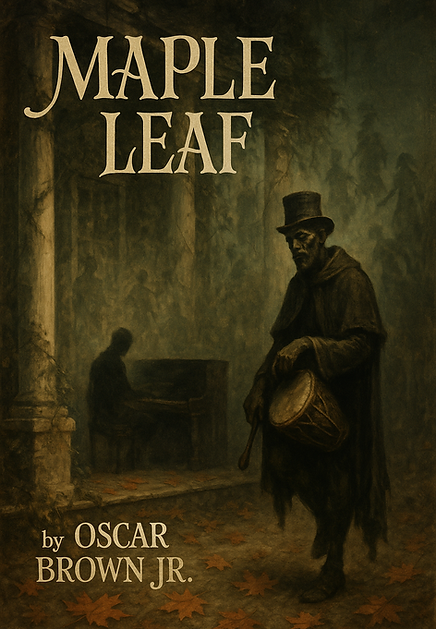
Oscar Brown Jr. masterfully crafted lyrics for five compositions by the legendary Scott Joplin, the "King of Ragtime Writers," to illuminate his tragic yet inspiring life story. The play transports us to the Manhattan State Mental Hospital, where a mentally and physically deteriorating Joplin lies confined. As he confronts his imminent demise from syphilis and the weight of his unfulfilled ambitions, his reality fractures. He drifts into a world of vivid hallucinations, where memories of his past intermingle with his present suffering. Joplin is visited by his devoted wife, Lottie, who provides a grounding presence, and by a whimsical, almost ethereal figure named Ragtime, who embodies the very essence of his musical genius. Through these encounters, both real and imagined, Joplin revisits the pivotal moments and influential figures that shaped his creative journey.
This richly layered "book musical," further enriched by original songs composed in the classical ragtime idiom, is meticulously researched by Janeth Rosamond of New York, ensuring a historically informed and emotionally resonant portrayal of Joplin's life and legacy.
CHARACTERS
Roles with Descriptions and Traits
SYNCOPATIONS
Music-Elite Syncopations (plays during Act I)
Bethena (also heard in Act I)
Bink’s Waltz (also referenced in Act I)
MUSICAL NUMBER
Song List
The Entertainer
Ragtime Ballet
Maple Leaf Rag
Whores
Ragtime Dance
Solace
Maple Leaf Rag Reprise
PROTOGONIST
Scott Joplin
The central figure. A talented and ambitious African American composer and pianist, known as the "King of Ragtime." He strives for recognition and acceptance of his work, especially his opera "Treemonisha," facing challenges related to racism, artistic limitations, and his own mental and physical health.

Potential Antagonists
-
Societal Prejudice/Racism: The prevailing racism and discrimination of the time, act as a significant antagonist, hindering Scott's acceptance and recognition.
-
John Stark (at times): While initially a supporter, Stark's later commercial interests and limitations on Scott's artistic expression can be seen as antagonistic.
-
Internal Struggles: Scott's own mental health issues, disappointments, and obsession with his opera "Treemonisha" also act as internal antagonists.
-
"Big Spenders" and Critical Voices: Representing societal judgment and prejudice, they act as antagonists to Scott's acceptance and success.
Role Descriptions
-
Roles range from central figures like Scott Joplin and Ragtime to supporting roles that provide context and commentary.
-
Some roles, like the Voices and Big Spenders, are primarily vocal and represent collective attitudes.
-
Other roles, like Lottie and the Nurse, provide personal interaction and support for Scott.
-
Historical figures like John Stark represent the music industry and the challenges Scott faced in that world.
-
The spirit of Ragtime and the character of Treemonisha represent Scott's artistic vision and aspirations.
OSCAR BROWN JR.
Licensing Request Form
Submit this form for rights, usage, or licensing requests concerning the works of Oscar Brown Jr.